Unifying Settings
Overview & Problem
Navigating Xbox settings often forced users into "serial search", which meant scrolling
through endless lists without a clear mental map. With settings scattered across various
platforms and surfaces, the experience felt fragmented.
Our challenge was to reorganize the global Information Architecture (IA) to ensure users
could find what they needed instantly, allowing them to spend less time in menus and more
time in gameplay.
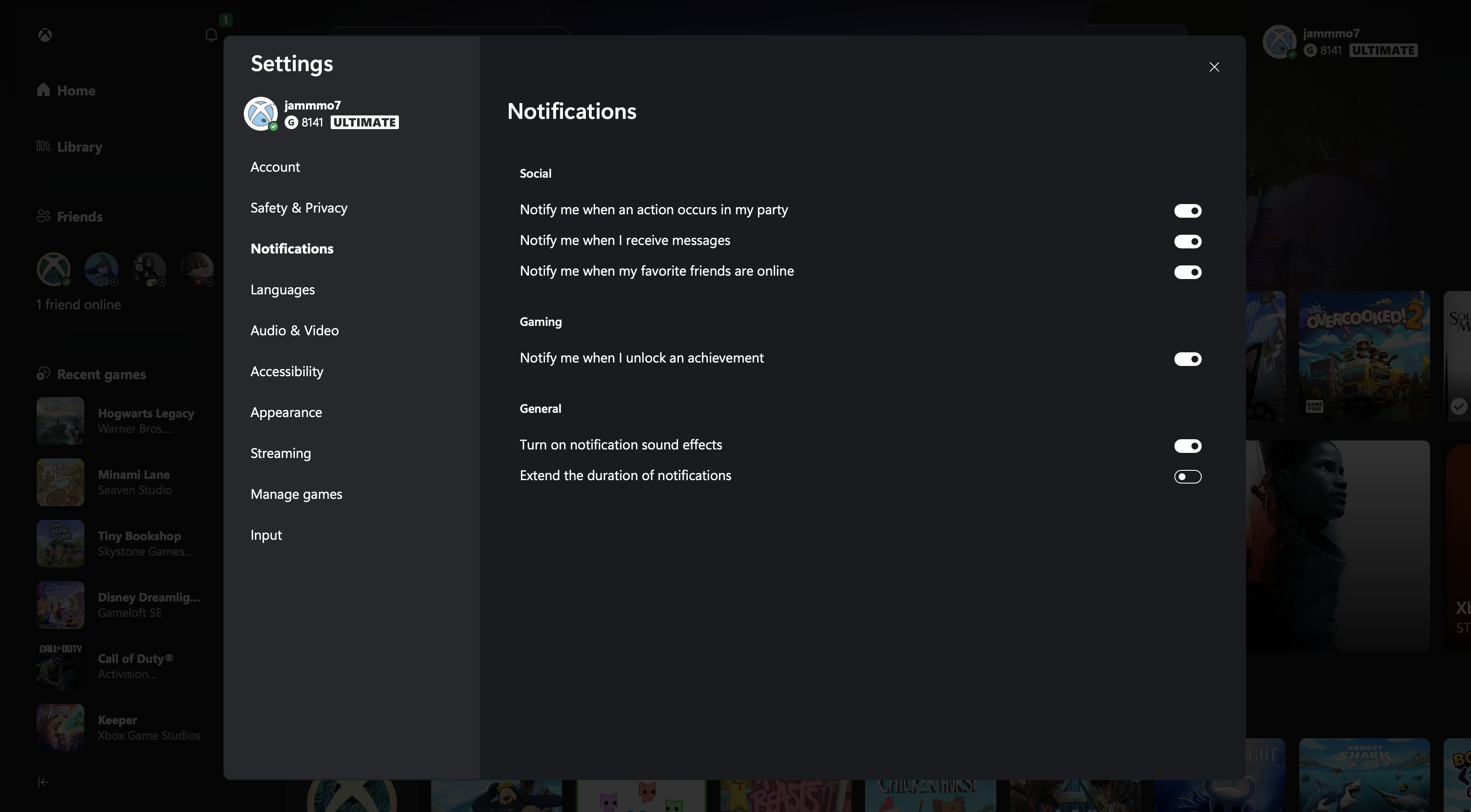
Settings: Notifications
Goals
Cross-Platform parity
Establish a unified settings structure across all surfaces while allowing for platform-specific technical requirements
Enhanced scannability
Define a visual hierarchy and IA that prioritizes readability and quick recognition
Taxonomy alignment
Consolidate disparate nomenclature to ensure features serving the same purpose shared the same name
Contextual awareness
Clearly denote "external" links to prevent user confusion when a setting exits the core console experience
Entry-Point consistency
Standardize the location of settings access points across every surface for a predictable user mental model
Approach
We began by auditing every setting across the Xbox ecosystem to identify gaps and redundancies. By conducting a comprehensive competitive analysis, I developed an artifact that mapped out a new point-of-view for our design system. We then adopted a crawl-walk-run strategy.
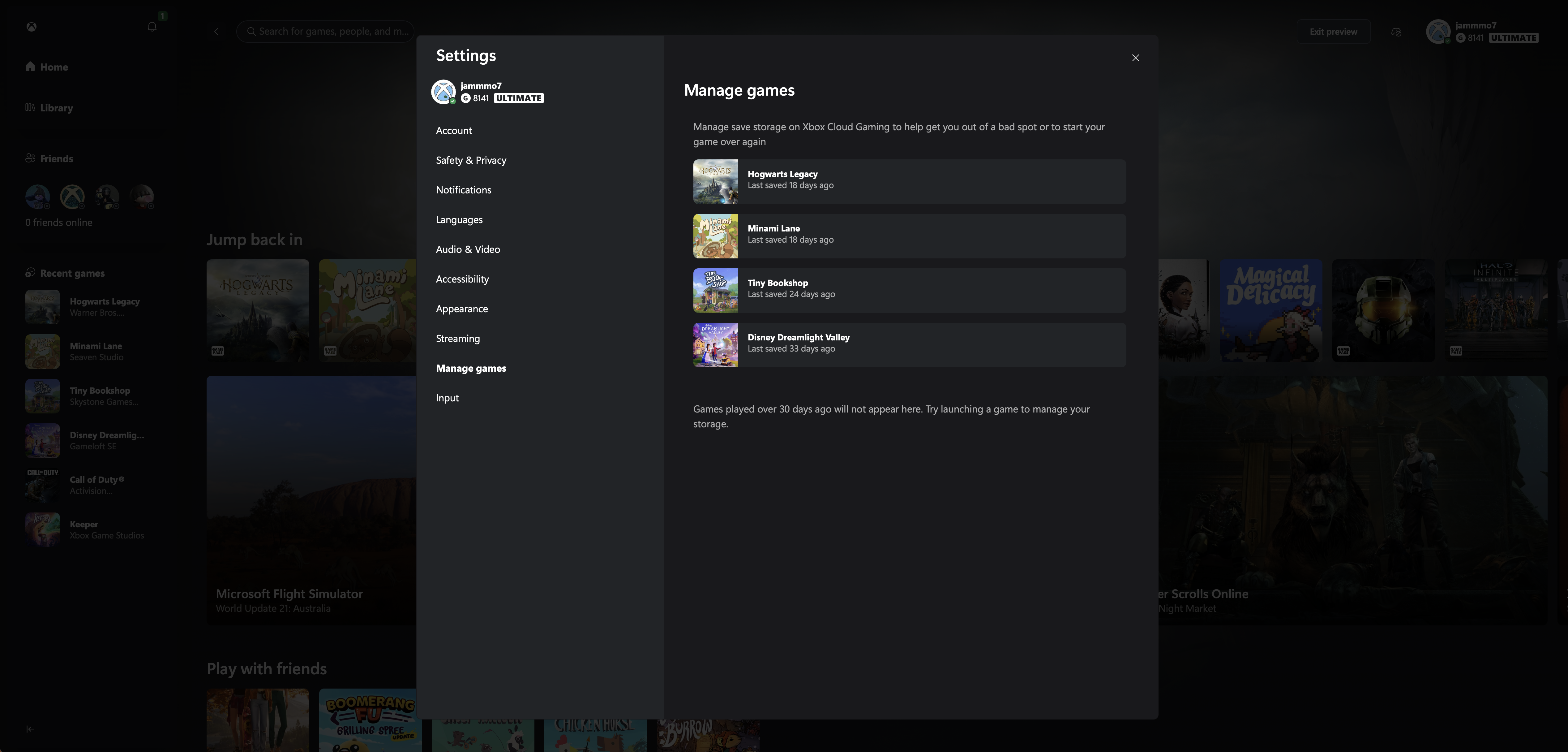
Settings: Manage games
Challenges
Legacy constraints
Balancing the new, streamlined architecture with legacy technical limitations that varied between console, PC, and mobile
Stakeholder alignment
Negotiating nomenclature changes across multiple engineering and product teams to ensure consistency didn't break existing workflows
Conclusion
By unifying the Xbox Settings experience, we reduced the cognitive load on players and increased "findability" scores across the board. This project didn't just re-organize Settings, it reinforced Settings as a cohesive, reliable environment. The result is a more inclusive and predictable experience that respects the player's time and focus, regardless of the device they use to play.